Workplace Health and Safety
DFO Employee Safety and Workplace Environmental Protection Measures
1. Corporate Commitment and Policy
Since its establishment in 2019, Dong Fang Offshore (DFO) has placed the safety, health, and environmental protection of its employees at the core of its corporate values. We are committed to providing a safe and healthy working environment, strictly adhering to regulations set by the International Maritime Organization (IMO) and relevant national laws. As a member of the International Marine Contractors Association (IMCA), all our vessels operate under the International Safety Management (ISM) system approved by the China Classification Society (CR). We also actively promote green energy and sustainable development to contribute to the long-term progress of the maritime industry.
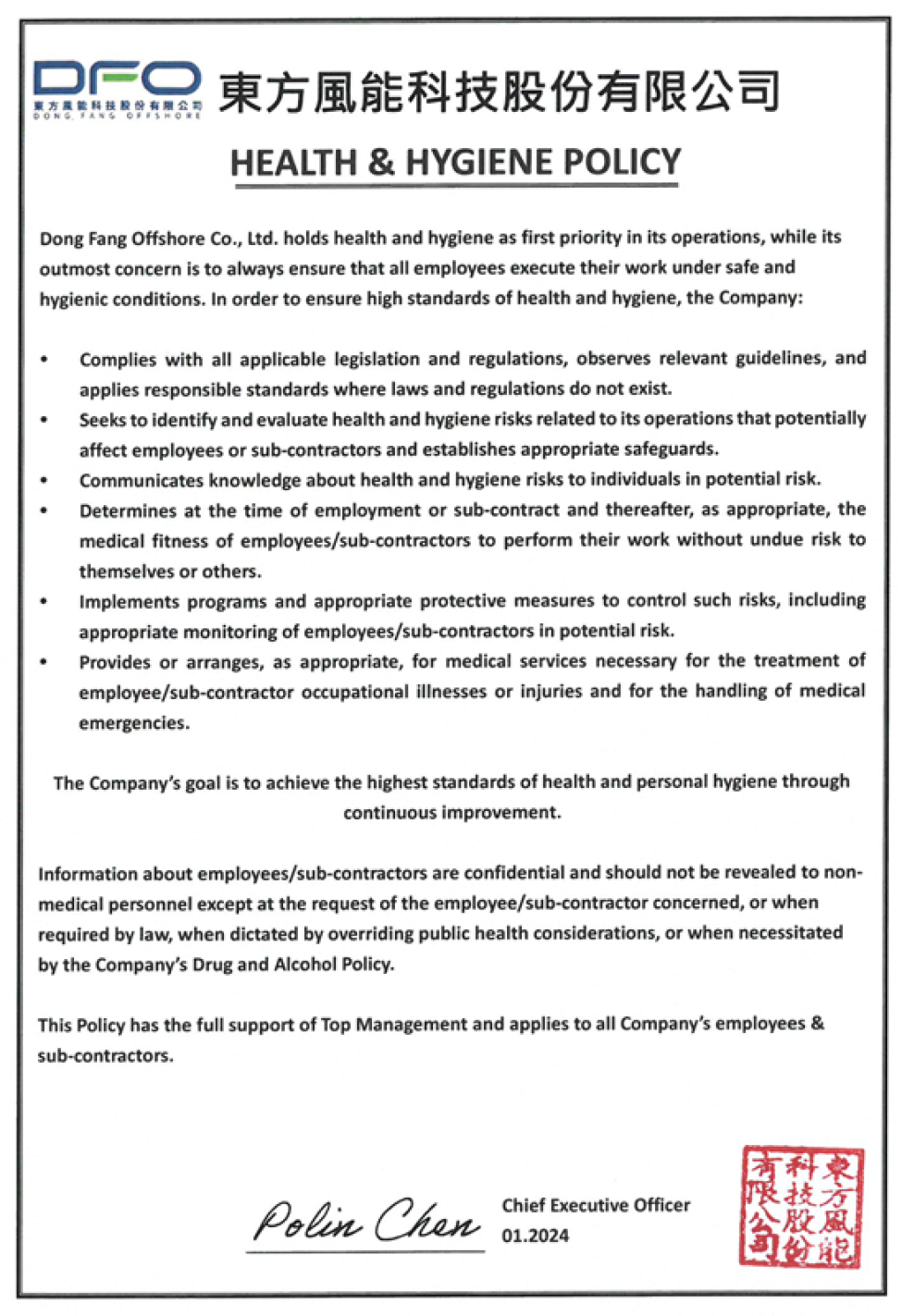
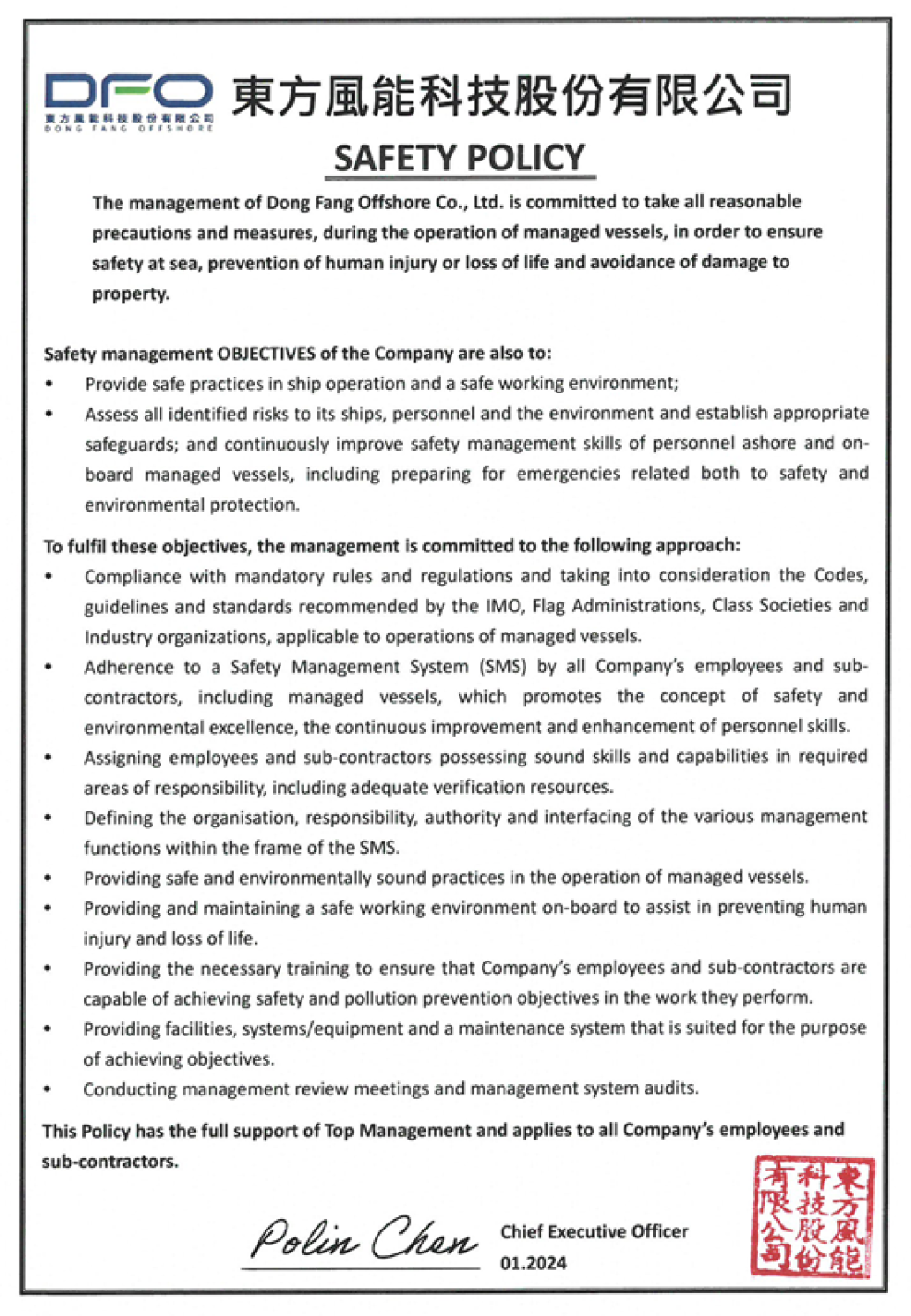
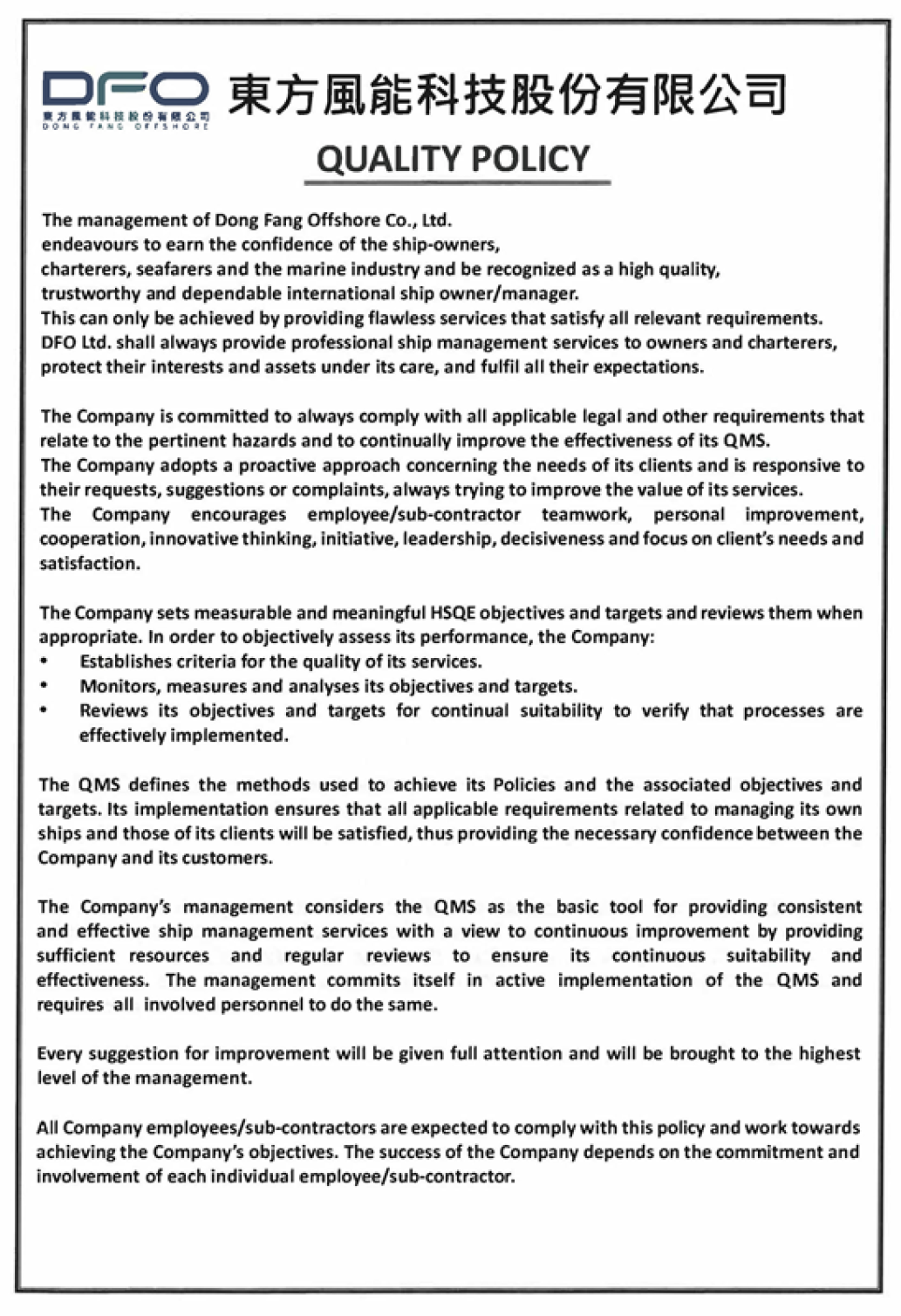
DFO’s Quality, Environmental, Health, and Safety (QEHS) Policy is founded on the following core principles:
-
Regulatory Compliance and Continuous Improvement: Comply with all applicable domestic and international regulations, industry standards, and customer requirements, while continuously enhancing the effectiveness and performance of the management system.
-
Risk Management and Prevention First: Proactively identify and assess potential risks, and implement preventive measures to safeguard personnel health and safety, protect the environment, and ensure asset integrity.
-
Zero Accident and Zero Pollution Goals: Strive toward a management culture with the goals of “zero accidents” and “zero spills,” promoting operations that prioritize safety, environmental protection, and quality.
-
Training and Capacity Building: Provide the necessary training and resources to ensure that employees and contractors are equipped to achieve QEHS objectives.
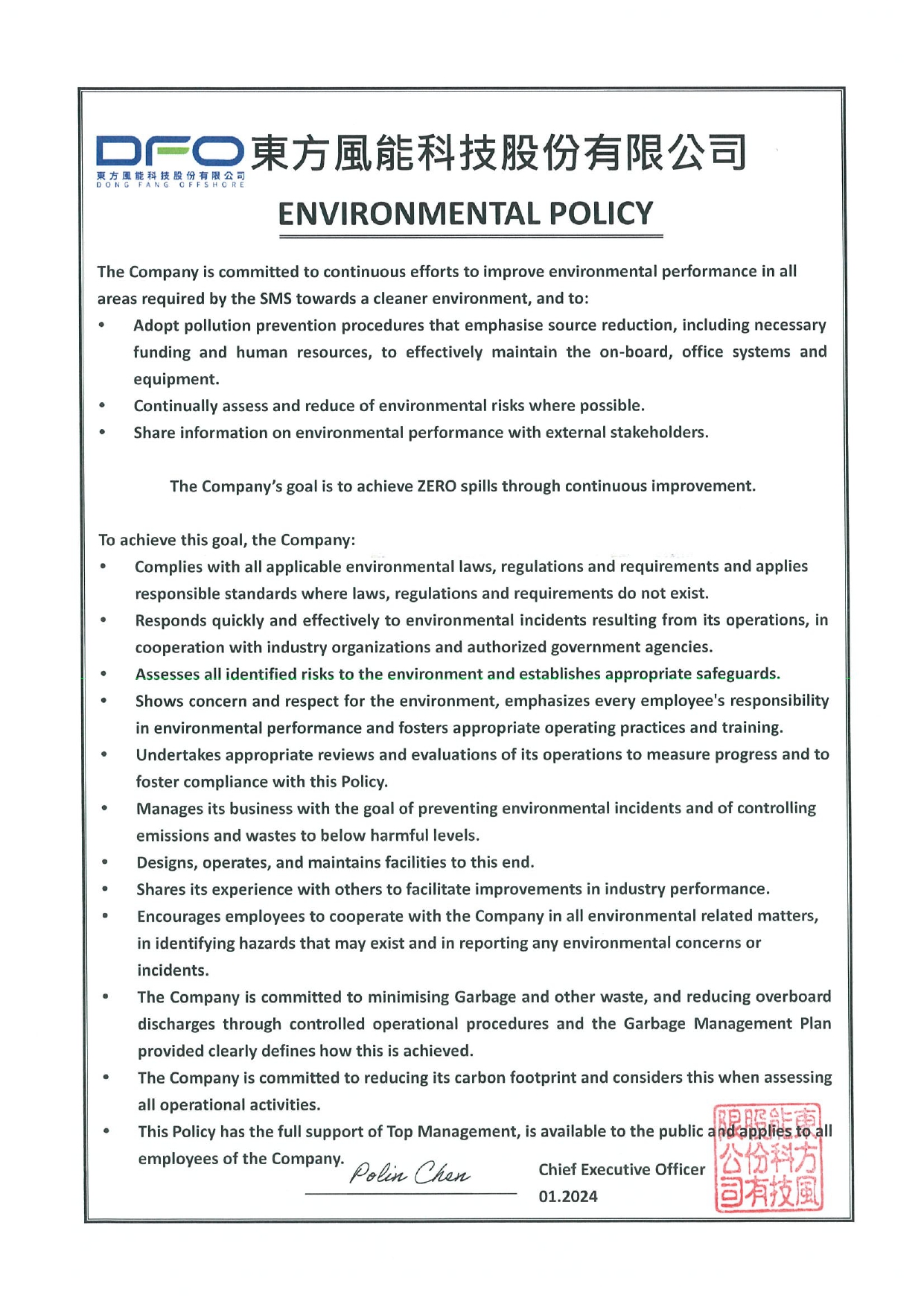
To combat global warming and protect ecological resources, Dong Fang Offshore (DFO) has minimized the environmental impacts of its operations by implementing the ISO 14001 Environmental Management System since 2020. Short-term targets, including "waste reduction" and "carbon footprint mitigation," were established across various operational frontiers, such as offshore navigation areas, quaysides, and office premises.
DFO successfully secured its first ISO 14001 certification within the same year. By building a systematic environmental management framework, the company aims to alleviate environmental impacts while bolstering corporate sustainability.
Throughout the implementation process, DFO has proactively driven environmental risk identification and control to guarantee the effective execution of all environmental management measures.
Since adopting ISO 14001, the company has successfully passed annual audits conducted by DNV, maintaining continuous certification from this prestigious body—a testament to our continuous improvement and regulatory compliance in environmental stewardship.
Furthermore, in 2025, DFO achieved the ISO 50001:2018 (Energy Management System) certification, making it the first company in Taiwan's offshore wind industry to receive this validation, thereby further strengthening its energy management and sustainable development strategies.
These certifications and policies not only reflect DFO's profound commitment to employee safety and environmental protection but also lay a rock-solid governance foundation, ensuring our continued leadership in the offshore wind sector.
Looking ahead, DFO will continue to fortify its environmental management systems and deepen ISO 14001-related practices, ensuring that corporate operations strictly align with international standards and contributing further to social and environmental sustainability.
To demonstrate its high commitment to occupational safety, environmental protection, and quality management, DFO has achieved the following international certifications:
-
ISO 45001:2018 (Occupational Health and Safety Management System)
-
ISO 14001:2015 (Environmental Management System)
-
ISO 9001:2015 (Quality Management System)
-
ISO 50001:2018 (Energy Management Systems)
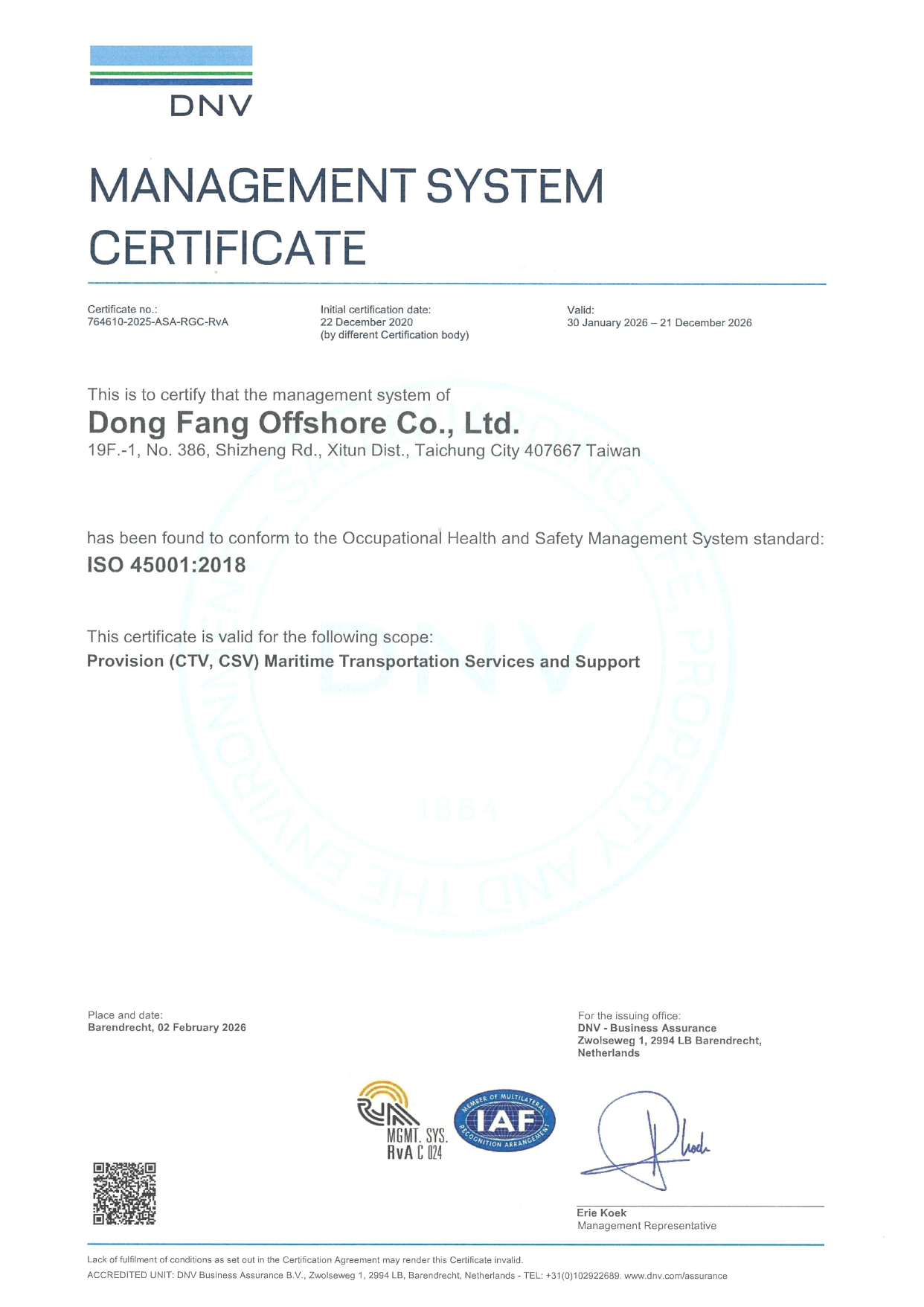
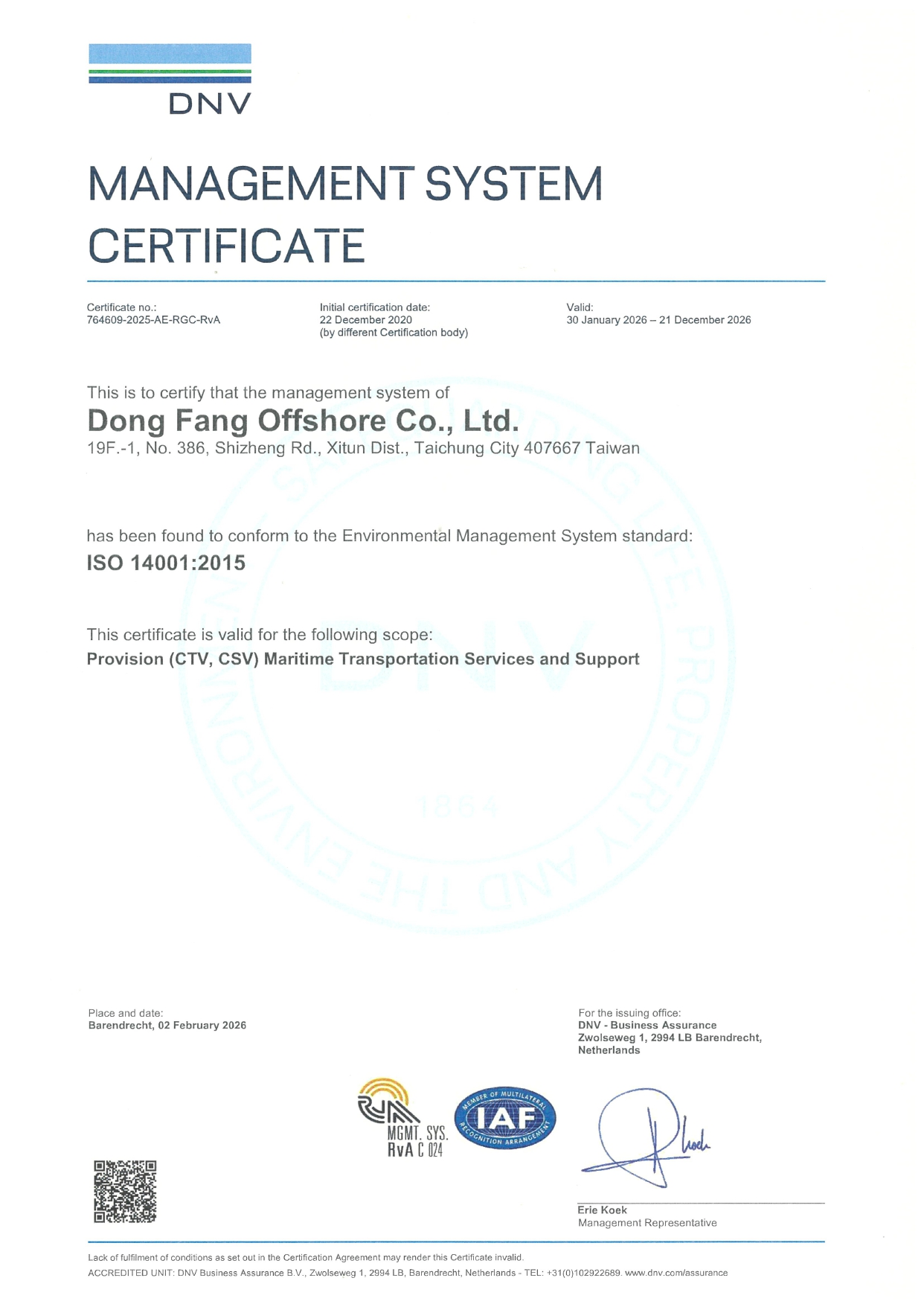
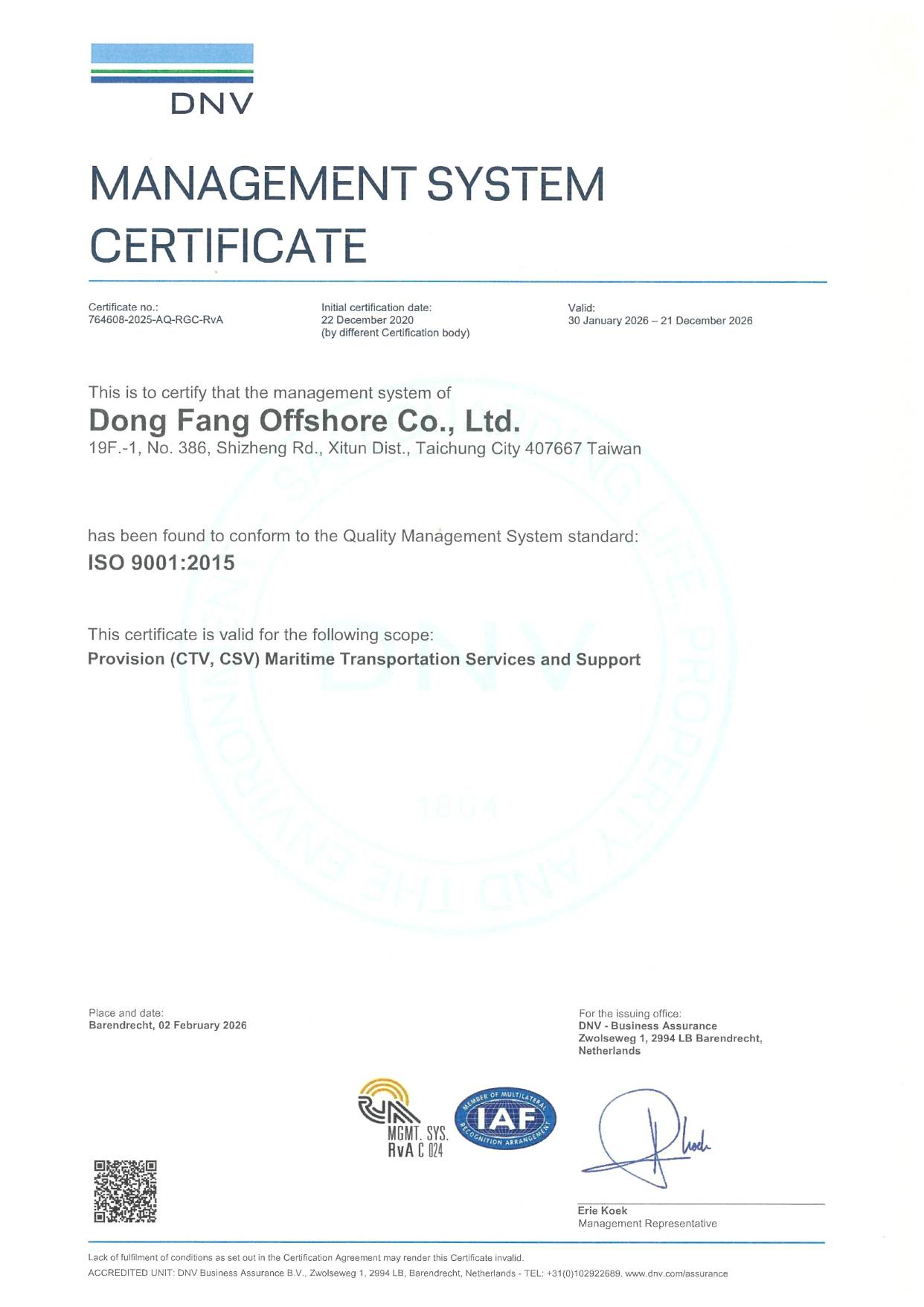
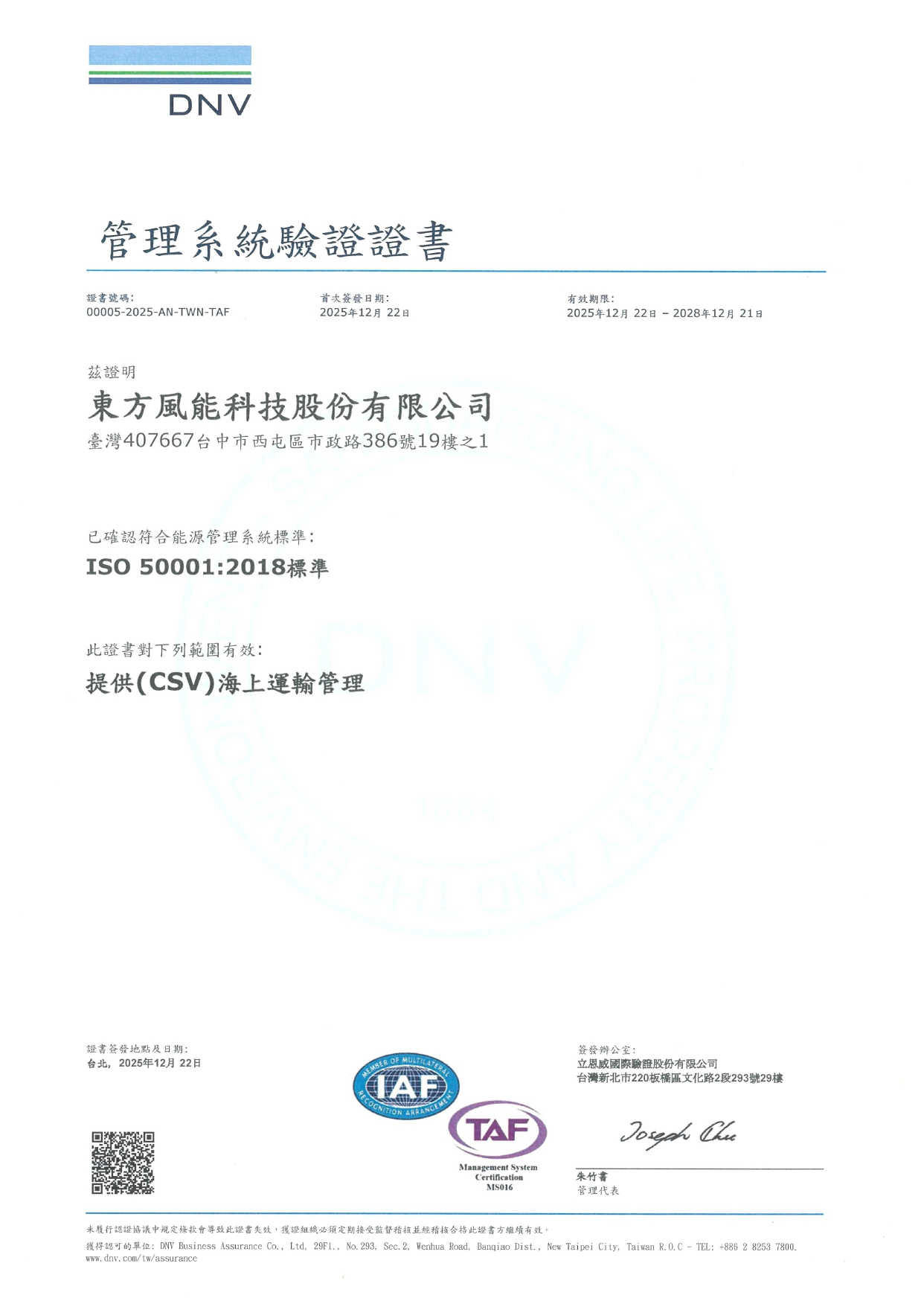
In addition, the company plans to obtain ISO 50001:2018 (Energy Management System) certification in 2025, becoming the first company in Taiwan’s offshore wind industry to achieve this certification. This milestone will further strengthen our energy management practices and sustainable development strategy. These certifications and policies not only reflect DFO’s commitment to employee safety and environmental protection but also lay a solid foundation for sound governance, ensuring our continued leadership in the offshore wind sector.
2. Workplace Safety Measures and Risk Management
Considering the unique nature of offshore engineering and marine transport, DFO has implemented systematic safety measures and risk control mechanisms to ensure a safe and stable working environment for all employees.
2.1 Fire Risk Identification and Mitigation
Fire risk is taken seriously, particularly in high-risk areas such as engine rooms, cargo holds, and fuel storage zones. Measures include:
-
Risk Assessments: Regular evaluation of fire hazards and implementation of control measures.
-
Fire Mitigation:
-
Installation of automatic fire detection and suppression systems (e.g., smoke detectors, sprinklers).
-
Availability of sufficient firefighting equipment, including fire extinguishers and blankets.
-
Routine fire drills to ensure preparedness.
-
Strict control of flammable materials and clear no-smoking signage in critical zones.
-
2.2 Vessel and Equipment Safety
DFO ensures vessel and equipment safety through:
-
Regular Inspections and Maintenance: Conducted in accordance with ISM Code and IMO standards.
-
Emergency Preparedness Plans: Including procedures for abandonment, lifeboat operation, and crew evacuation—practiced regularly to ensure readiness.
2.3 Personal Protective Equipment (PPE)
DFO provides employees with internationally compliant PPE (e.g., helmets, life jackets, non-slip boots, goggles) and enforces:
-
Monthly checks and replacements of damaged equipment.
-
Appropriate gear for various work environments to mitigate operational risks.
2.4 Hazard Identification and Risk Assessment
DFO maintains a systematic risk management process:
-
A formal procedure for identifying occupational health hazards and evaluating risks/opportunities.
-
Risk assessment results inform the development of safety objectives, controls, emergency plans, and training to ensure a safe work environment.
2.5 Emergency Response Management
In alignment with IMO guidelines, DFO conducts:
-
Monthly emergency drills for fire, abandonment, collision, man overboard, emergency towing, oil spills, and flooding.
-
Comprehensive emergency procedures to ensure employees are prepared for unexpected events.
2.6 Innovation in Safety Technology
DFO has introduced Taiwan’s first operation and maintenance vessel with a motion-compensated gangway, allowing for safe crew transfer to turbine platforms. This significantly reduces man-overboard risks and improves operational efficiency.
3. Environmental Protection Measures and Initiatives
DFO incorporates environmental protection into its core sustainability strategy, implementing various initiatives to reduce ecological impact and support the transition to green energy.
3.1 Waste Management
In strict compliance with the MARPOL Convention, DFO ensures proper handling of vessel waste (e.g., oily residues, garbage, wastewater) through:
-
Onboard waste sorting and recycling systems.
-
Periodic waste management audits to minimize environmental impact.
-
Standard Operating Procedures (SOPs) aligned with international environmental standards.
3.2 Marine Ecology and Cetacean Protection
DFO acknowledges the potential impact of offshore wind operations on marine ecosystems, especially cetaceans, and has adopted the following measures:
-
Low-Noise Equipment: Utilizing environmentally friendly, low-noise construction technologies.
-
Trained Cetacean Observers: Six observers certified as Marine Mammal Observers (MMO), with 2–4 assigned per vessel to monitor and avoid cetacean activity zones.
-
Route Planning: Routes are designed to avoid whale and dolphin habitats and reduce disruption.
-
Dedicated Observation Vessels: Deployed for constant monitoring and to prevent collisions with marine mammals.
3.3 Marine Emissions and Air Quality Control
In response to climate change, DFO promotes its Green Ship Program, including:
-
Low-sulfur fuels (<0.5%) and energy-saving technologies to reduce emissions and air pollution.
-
Regular carbon emissions tracking and reporting, with reduction targets aligned with international climate commitments.
3.4 Energy Efficiency
To enhance energy performance, DFO has:
-
Introduced smart energy management systems to optimize wind farm operations.
-
Planned ISO 50001:2018 certification in 2025 to further improve energy efficiency and sustainability.
-
Conducted periodic energy audits to identify and address high-consumption areas.
4. Implementation and Recognition
Through comprehensive safety and environmental practices, DFO has achieved significant results and earned recognition from external organizations.
4.1 Safety Training and Incident Statistics
-
Training: At least 20 hours of safety training per employee annually, covering fire response, first aid, environmental protection, and occupational health.
-
Accident Records: Zero major safety incidents over the past three years; injury rate consistently below industry average.
4.2 Certifications and Audit Mechanisms
-
Certifications: DFO is ISO 45001 and ISO 14001 certified, confirming its commitment to safety and sustainability.
-
Internal Audits: Quarterly HSE reviews reported to the Board of Directors to ensure continuous improvement.
4.3 Social Responsibility and Workplace Health
-
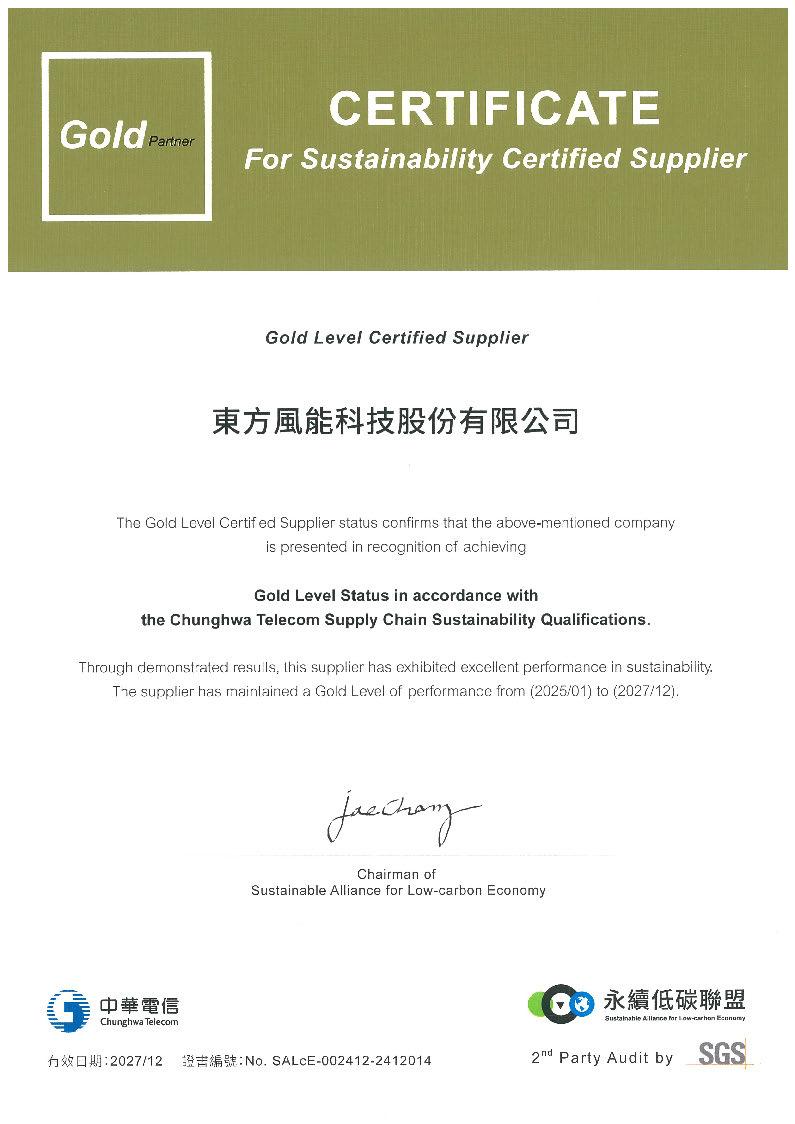
CSR Awards: In 2024, DFO received the Gold Award in the Chunghwa Telecom CSR Supplier Audit.
-
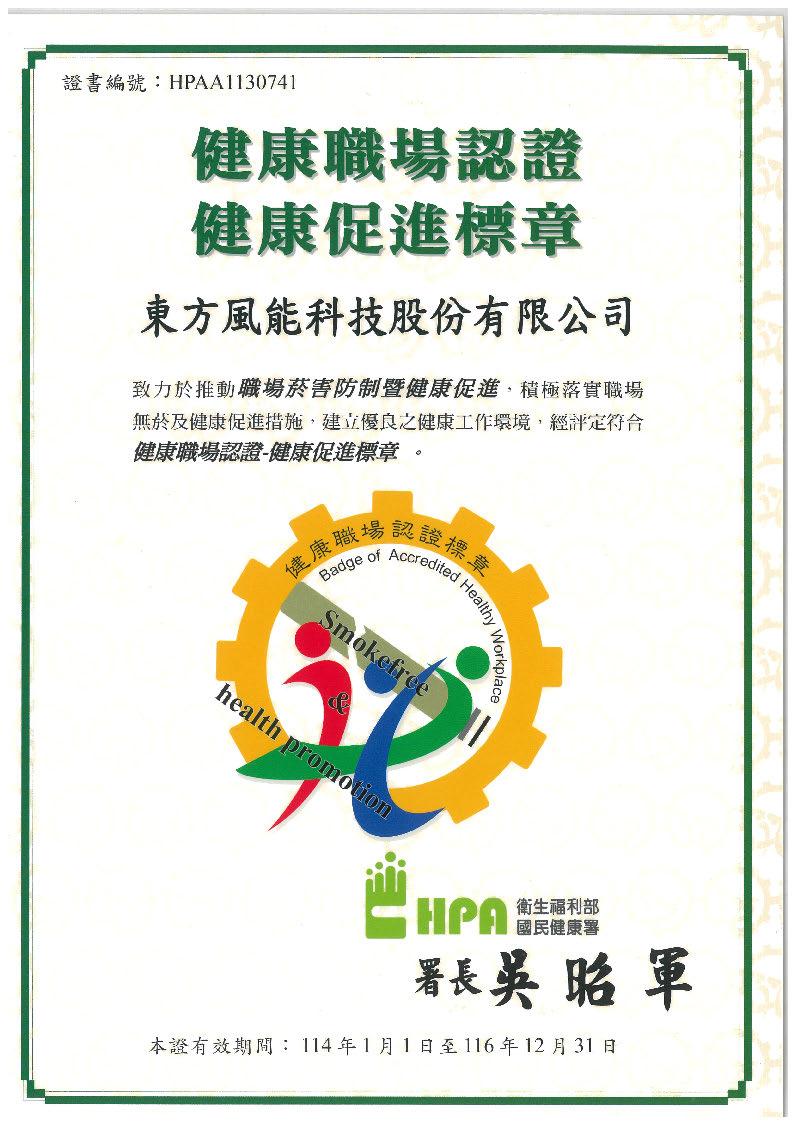
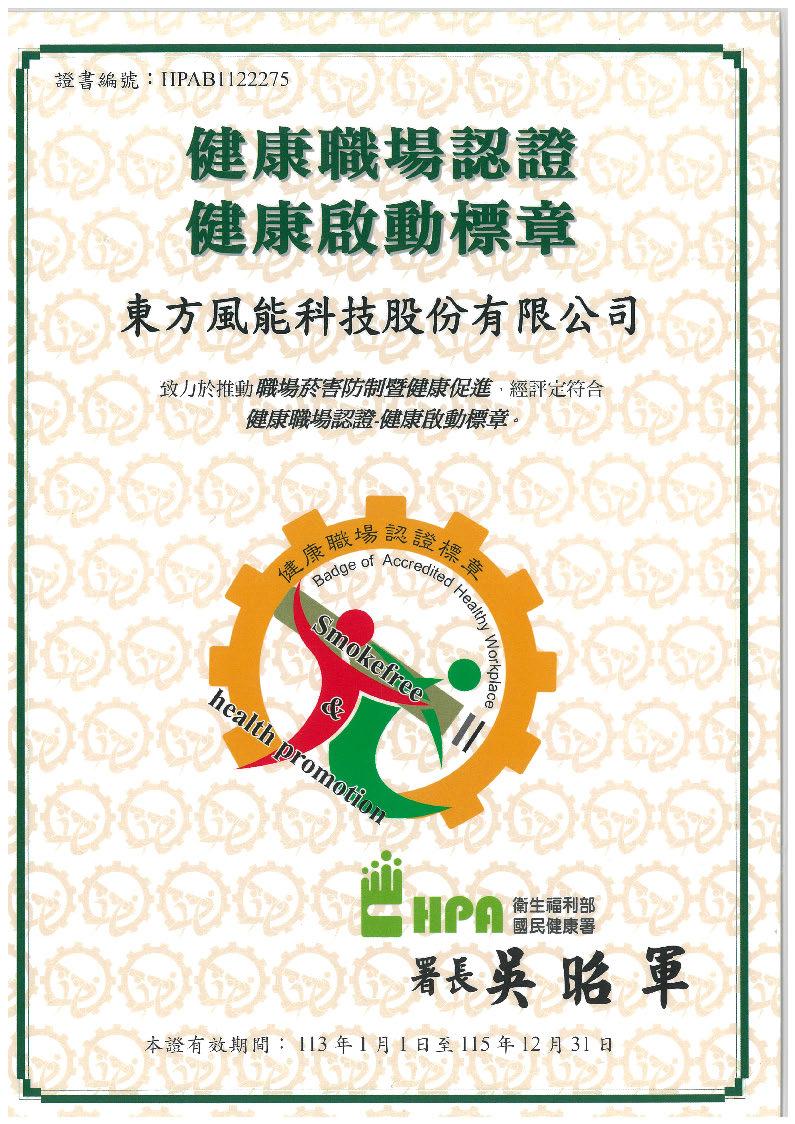
Healthy Workplace Certification: Achieved the Healthy Workplace - Health Initiation Mark in 2023 and the Health Promotion Mark in 2024, reflecting our long-term investment in employee well-being.